
Have you heard of the ripper sporting resource that might just be what you’re looking for called Disability Sports Australia!
Could there be a sport that's right for you?
July 9, 2026
There are more opportunities than ever for people with disability to get involved in sport.
From swimming and athletics to tennis, football and martial arts, many sports have adapted their rules, equipment or formats to make participation more accessible. Whether you're looking to compete, stay active, meet new people or simply try something new, there are plenty of options to explore.
Let's explore some of the options together, but remember, it is important to consult your doctor or healthcare provider to ensure your chosen sport is safe and appropriate for you.
Swimming
Swimming is accessible to people with physical, intellectual or visual impairments, with few modifications needed. Unsurprisingly, for a nation with a largely coastal lifestyle, swimming is popular across all age groups. Data from The Clearinghouse for Sport, collected from 2018-2022, indicates around 450,000 Australians with a disability swim at least once a week. Athletes can participate at all levels, from exercising to competing at Paralympic level. Swimming is a great way to meet new people or just stay fit and healthy.
Cycling
Cycling is another hit across all ages, with a 300,000+ strong regular participant base according to the same Clearinghouse report. It includes categories for blind and visually impaired riders, people with cerebral palsy, locomotor disabilities, and handcycling. Adaptive equipment, such as bicycles, tricycles, tandem bikes, and handcycles, ensure everyone can participate. Cycling clubs around Australia offer social and fitness-oriented activities, helping to improve overall fitness and provide a sense of community.
Running/Athletics
Around 220,000 Australians with a disability regularly participate in running or athletics-related activities. These sports cover various track and field disciplines, with adaptations such as wheelchairs and prosthetics for races, relays, marathons, and throwing events like discus, shot put, and javelin. Athletics provides a wide range of opportunities for both recreational and competitive engagement, fostering a sense of achievement and physical fitness. Frame Runners, wheelchairs, prosthetic devices and rope tethers for visual impairment are just some examples of the innovative technology available that make these activities more accessible.
Tennis
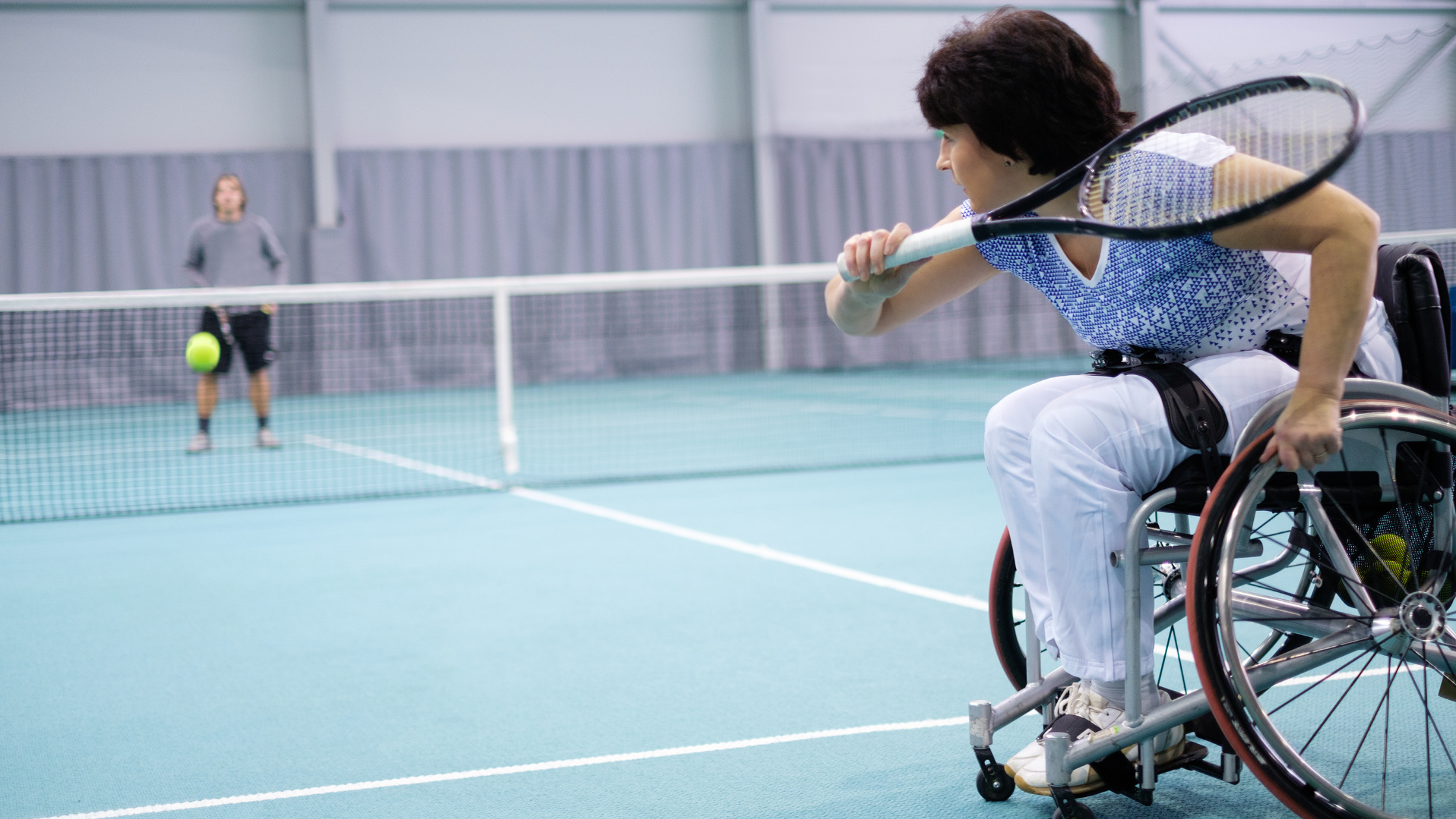
Tennis is welcoming, safe, and inclusive for players with a disability. The two main categories for adaptive tennis are standing tennis or wheelchair tennis, with adaptations for vision, hearing and intellectual disabilities. Wheelchair tennis – which is a Paralympic sport - follows the traditional rules, with the exception that players are allowed two bounces of the ball. There are two class divisions based on functional ability: Open Division and Quad Division.
Standing tennis, also known as adaptive standing tennis or Para standing tennis, has four classifications to account for the impact on mobility different impairments will make for players. Tennis is a fantastic way to improve hand-eye coordination, agility and overall fitness.
Football/Soccer
Football or soccer can be great fun, whether you’re looking to play competitively or socially, to meet new friends, gain skills, or work on your fitness. Many forms of soccer promote participation for athletes with disabilities. The strategy and teamwork involved in soccer and football games have huge benefits for social inclusion and self-esteem. There are three main types of adaptive football in Australia – Blind Football, which is played at the Paralympic Games, Cerebral Palsy Football, and Powerchair Football.
Powerchair Football is played on indoor futsal courts with dedicated sports powerchairs equipped with special foot guards which players use to “kick” the larger Powerchair Football ball.
Martial Arts
Martial arts, such as fencing, karate, and judo, are fantastic for building confidence, discipline, and physical fitness. Adaptations ensure safety and inclusivity, allowing participants to engage fully in the sport.
Wheelchair fencing or ‘adapted fencing’, is a foundation sport of the Paralympic Games, since its inception in Rome, 1960. The sport relies on the same three instruments (foil, épée and sabre) used in the traditional combat sport, with sparring done from each fencer, using a wheelchair secured to the floor to ensure stability, and using a frame to maintain the correct distance between opponents. This allows athletes to fully engage in the sport using upper body strength and strategy.
Para karate or ‘adapted karate’ is growing in popularity following its inclusion in the World Karate Federation in 2006. Techniques can be
modified to accommodate physical limitations, focusing on developing self-defence skills, strength and mental focus. Adaptations include seated positions for those unable to stand, and the use of visual and tactile cues for visually impaired athletes. Many clubs offer inclusive classes that cater to a wide range of abilities, ensuring that everyone can benefit from the discipline and physical conditioning karate provides
Judo is particularly beneficial, it can help you improve your fitness, flexibility, strength, balance, coordination and self-esteem. Techniques can be adapted to suit various abilities, allowing all athletes to participate safely and effectively. Whilst the Paralympics has a category for the visually impaired, adaptive judo is inclusive to a much broader range of disabilities including autism, cerebral palsy, Down syndrome, vison and hearing impairments and more.
Practicing martial arts can significantly enhance confidence and self-esteem. The structured environment and progressive skill development provide a sense of achievement and personal growth, as well as an opportunity to meet new people and make new friends.
Try something different
This list is just the beginning, there are many other adaptive sports available, such as dance, basketball, archery, rowing, and many more. Not every sport will be the right fit, and that's okay, finding an activity you enjoy can take a little time.
The important thing is exploring what's available and discovering what works for you. The best sport is the one that keeps you coming back, whether that's for the competition, the fitness, the friendships or simply the fun of being involved.
This article is just one chapter from NDSP's free ebook Get Active, Stay Involved, created in partnership with Paralympics Australia. Inside, you'll find athlete stories, practical information about getting involved in Para sport, and insights into the history, innovation and impact of the Paralympic movement.
Download the free ebook to explore more stories and discover what Para sport could look like for you.
Related Posts
More news

Recent posts
Will My Child Stay on the NDIS Under Thriving Kids?
October 20, 2026
Will the NDIS fund my driving lessons?
October 20, 2026
How Do You Vet an NDIS Provider Before You Sign Up?
October 18, 2026
Is Your NDIS Funding Changing from October 2026?
September 24, 2026
Can Providers Charge You for Cancelled NDIS Appointments?
September 20, 2026
About us
NDSP is a NDIS registered provider, specialising in Plan Management. We are here to manage your NDIS funds on your behalf. Our experienced staff are highly skilled and ready to help you!