
Your support coordinator and plan manager might not always agree on your NDIS funding. Find out why it can happen, and what you can do to resolve it.
Capital Supports budget: Assistive Technology
April 17, 2025
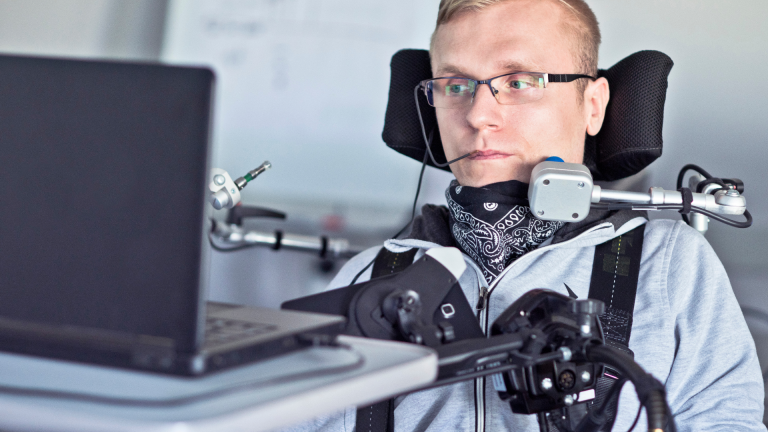
Assistive Technology (AT) is a category under the Capital Supports budget in your National Disability Insurance Scheme (NDIS) plan. Capital Supports are one of the three main budgets you can have funded in your plan. The other two are Capacity Building and Core Supports.
Understanding the Capital Supports Budget
Of the three main NDIS budgets, Capital Supports is known as the least flexible in terms of support items. The two main categories (Assistive Technology, and Home Modifications) typically cover higher cost items:
- Assistive Technology in this category is for items typically priced over $1,500. If approved, assistive tech valued under this threshold may be purchased using your Consumables funding (as a Core Support).
- Home Modifications can range from minor to complex, non-structural to structural – changes to your home to make it easier for you to live there safely.
- You can also receive funding for AT repair and maintenance, for any assistive technology you are currently using in your plan.
- There is also a category in Capital Supports for Specialist Disability Accommodation, though the eligibility criteria is very specific.
Because your Capital Supports involve a bigger investment from the NDIS, the rules around what you can purchase are fairly specific – as are the requirements for providing evidence and quotes.
What is Assistive Technology?
Assistive technology, by general definition, is any piece of technology (such as adaptive equipment and prosthetics, or assistive products for hearing or vision) that can assist you in completing tasks that were otherwise not accessible, and be more independent in your daily life.
There are more defined terms as to what qualifies as AT when referring to the NDIS category. Assistive technology has a fairly long list of possible items outlined – you can see the full version in the NDIS ATHM and Consumables Guide. Your personal assistive technology budget will be outlined according to your plan, so it’s important to make sure your NDIS plan reflects your needs accurately.
What may be funded by NDIS Assistive Technology:
- Assistive products for household tasks and access
- Assistive products for personal care and safety
- Specialised household furniture, bathroom and toilet equipment
- Specialised communication and information equipment
- Assistive products for hearing or vision
- Personal mobility equipment
- Specialised wheeled mobility items, wheelchairs, and scooters, and specialised seating for these
- Prosthetics and orthotics
- Vehicle modifications
What isn’t funded by Assistive Technology
Anything that isn’t related to overcoming a functional limitation, will not be covered by this category. This is because it would not pass NDIS ‘reasonable and necessary’ criteria in regard to your disability needs.
How this works in practice: You may have funding approved for modifications to your car, like adaptations to the steering, brakes, or accelerator. These help you to travel independently, which in turn helps you to reach other goals in your plan.
However, you would not be able to fund purchasing the car itself – nor maintenance/repair costs that aren’t specific to the assistive technology installed. These are costs everyone must pay regardless of disability, and they don’t qualify to for NDIS funding.
Related: Aging with a Disability: Transitioning from the NDIS to Aged Care
Examples include:
- Standard computers, computer accessories, consoles and games
- Tablets or mobile phones (including smartphones)
- Streaming subscriptions
- The cost of your internet connection and data
- Built environments like ramps that are used by others, e.g. at school or at work
What about Replacement Supports?
In some cases, the NDIS might decide to fund alternate supports for AT that are not classified as NDIS supports. These are called replacement supports. This is not additional funding; it will instead be pulled from existing funds.
You MUST have written approval from the NDIS before purchasing any replacement items. If you go ahead with the support before your approval is granted, your claim may be declined by the NDIS.
The 3 Cost Thresholds of NDIS Assistive Technology
Assistive technology is split into three broad, price-structured levels under the NDIS. These costs are all per item. The levels determine which budget an AT item will be purchased under, and the supporting documentation you will need to provide.
1. Up to $1,500: Low Cost Assistive Technology
Purchase of AT items under $1,500 each would be covered by your Core Supports – Consumables budget, not your Capital Supports – AT budget. Low cost AT doesn’t normally require a quote. The items are mostly simple products or devices that are readily available through retailers.
2. Items valued $1,500 – $15,000: Mid Cost Assistive Technology
Mid cost AT would be funded with your Capital Supports budget. You’ll require written evidence from a qualified AT advisor and a quote in most cases to secure approval. This helps show the NDIS that the product or item is safe to use, right for your needs, and good value.
3. Over $15,000: High Cost Assistive Technology
If the AT you are trying to have funded costs more than $15,000, you will need to provide the NDIS with an assessment by a professional AT advisor, and a quote for the AT itself.
Depending on what it is, you might have to trial the high cost item to demonstrate that it was effective, safe, and fit for purpose in your case. This may involve a short-term rental of the item before it’s approved. You will only be able to buy the item as specified in your plan.
High risk vs Low risk AT Explained
Risk levels are another layer of complexity the NDIS uses to assess whether the equipment is safe, suitable, and a good investment to help you achieve your goals.
Low risk AT is unlikely to cause harm in everyday life, is typically readily available, and is easy to set up without help. Usually (but not always), these items are at the lower end of the price range – for example, grab rails.
High risk AT is more complex, and might cause harm when used in daily living environments. These items may need professional advice, training, or set up to use safely – such as vehicle adaptations, prosthetics, or transfer aids.
Assistive Technology in your NDIS Plan
Most AT budgets will specify what items you can claim funding for as they correspond to your plan.
If you can provide your Plan Manager with a copy of your plan document, they will be able to see exactly what has been funded into these budgets. You will still have choice and control over how your funding is used – having the exact wording just helps process items from the AT budget.
How to access AT funding
If you want to include assistive technology in your NDIS plan, best practice is to work with your treating therapy providers (allied health professionals) to identify the right equipment. You can then submit this evidence at your plan meeting to help strengthen your application.
The evidence you provide informs the funding within your AT budget. Be sure to double-check what evidence you need, and who needs to provide it, before your plan meeting. If you need help with this process, you can check in with your Support Coordinator or Local Area Coordinator (LAC) for assistance.
Many NDIS participants already have some level of AT funded supports in their plan. If you would like to know the details of what’s currently funded in your plan, including what funding has been spent and how your budgets are tracking, you can query this with your Plan Management provider.
Example: Jane’s Wheelchair
Jane, an NDIS participant, needs an electric wheelchair to get around without assistance. This aligns with her goals to increase independence in her daily life, and participate more in social and community activities.
Working with her occupational therapist (a qualified allied health practitioner) and an assistive technology assessor, Jane is able to deliver the appropriate evidence at her plan review. The specific item and amount is added to her plan: $7,300 allocated for an A47 Four Wheel Drive Electric Wheelchair. She can only use this funding to buy the specified item.
Plan Management simplifies your NDIS Journey
Working with plan management specialists like NDSP provides better peace of mind on your NDIS journey.
Plan management is the mid-ground between self and agency management. If you are a plan-managed participant, the financial aspects of your NDIS plan are taken care of for you. This includes:
- Financial record keeping (in case of NDIA audit)
- Making sure invoices are NDIS-compliant
- Coordinating timely provider payment
- Tracking budgets
- Providing regular reports of your progress
You are still able to exercise choice and control over how your funds are spent and which providers you use, so long as it is compliant with your plan and with NDIS guidelines.
NDSP: Your Plan Management Specialist
NDIS budgets can seem complicated – and outside of basic compliance, there are often different rules depending on which category you are trying to access funding from. Working with NDSP Plan Managers helps you make the most of your funding, even in categories as rigid as Capital Supports.
We’re dedicated to helping make the NDIS process easier for you, so you can focus on the more important things. NDSP clients enjoy:
- Clarity: Not only do you have a live view of your NDIS budgets 24/7 through our user-friendly Nappa portal; NDSP clients can also contact our team of experts with questions about any and all things NDIS.
- Consistent support: As a national provider, NDSP provides the same exceptional level of plan management services to participants all around Australia – even if you’re in a very remote situation.
- Up-to-date guidance: Our team is well-versed on the latest processes and changes to the NDIS, and know how to help you work within this system to make the most of your NDIS plan. If you want to learn more for yourself, we also have a free Participant Toolbox resource to help you on your NDIS journey, so you can feel confident making informed decisions.
If NDIS plan management sounds like something you might be interested in, contact NDSP today to experience our friendly, comprehensive support.
Related Posts



Recent posts
Will My Child Stay on the NDIS Under Thriving Kids?
October 20, 2026
Will the NDIS fund my driving lessons?
October 20, 2026
How Do You Vet an NDIS Provider Before You Sign Up?
October 18, 2026
Is Your NDIS Funding Changing from October 2026?
September 24, 2026
Can Providers Charge You for Cancelled NDIS Appointments?
September 20, 2026
About us
NDSP is a NDIS registered provider, specialising in Plan Management. We are here to manage your NDIS funds on your behalf. Our experienced staff are highly skilled and ready to help you!