
Moving into your own place is a big step. The right NDIS funding may help support the transition, from building skills to day-to-day assistance in your new home.
How to Apply for a Disability Parking Permit in Australia
January 6, 2025
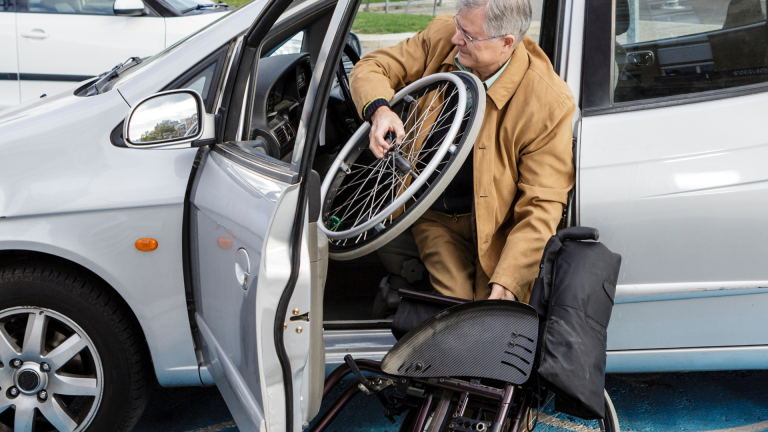
As an individual Disability Parking Permit (DPP) holder in Australia, you would be eligible for certain allowances which can better accommodate your needs. This can be a huge help to people with limited mobility as it makes parking in public spaces a much more accessible endeavour.
Applying for a DPP must be done through your state or territory authority. While the permit itself is recognised nationally, State and Territory Governments are in charge of managing their own permit requirements and the application processes. These comply with the Australian Disability Parking Scheme (ADPS), which outlines the minimum national standards.
What is a disability parking permit?
The Australian DPP is a permit that you can apply for if you have limited mobility, which can allow you or the person driving you (depending on your circumstances) to park in designated disability parking spots. These are typically closer to the destination and better designed for improved accessibility.
People issued permits are also be able to stay longer in non-designated, such as:
- Up to 60 minutes in an area where the parking limit is less than 30 minutes.
- Up to two hours in an area where the parking limit is between 30 minutes and one hour.
- Where the time limit is one hour or longer, permit holders can park for twice the time indicated by the sign.
These exceptions include spaces with parking meters. It’s all in the name of getting you where you need to be, and allowing more time if your speed of movement is significantly restricted.
Three types of permits can be issued: For people with permanent physical impairment, for those with a temporary mobility disability, or for organisations.
1. Temporary individual DPPs
These offer support for situations like recovering from an incident which has significantly impacted your mobility, or where you require the use of a wheelchair for a short time. This addresses temporary disability, without supplying long term or permanent disability parking permit – perfect for if recovery is unlikely to take more than six months.
2. Permanent individual DPPs
This is for people with permanent medical conditions or mobility impairments, such as having lost one or both legs. However, limb loss is by no means the only criteria for a permanent DPP – if you meet your state’s requirements in terms of mobility restriction or impairment, you are able to apply.
3. Organisational DPPs
These are for organisations that regularly transport people with disabilities. Unlike the individual ones, these are assigned to vehicles (per their registration) and not a specific person in the organisation.
How to apply for an Australian Disability Parking Permit
Generally speaking (and allowing for differences across Australian territories and states), the process for being issued a disability parking permit is as follows:
- Download an application form, or pick it up in person from the relevant state or territory agency.
- Take the form to your medical doctor (your GP) to complete and sign the relevant parts. Sometimes you may also need a letter from your occupational therapist.
- Additional documentary evidence may include a Centrelink disability card, photo exemption letter, supporting letters – again, you should check local guidelines for exactly what you need.
- Provide acceptable proof of identity. This might be something like a driver’s license; or if you do not have a valid ID, you may be required to provide supplementary documents.
- Submit your application form – depending where you live, this may be by post, online, or in person.
It’s not the most streamlined process, but it’s designed to distinguish between those who simply want a disability parking permit, and those who need one. Be sure to check the details for your state or territory, including processing times.
What if my disability parking permit application is rejected?
There is an appeals process you can undertake if you believe your DPP application was mistakenly rejected. You should be notified of your options for this when you receive the decision from the relevant agency, or you can find it on their website.
Are disability parking permits easy to get?
Not really – but for good reason. There are several layers to get through before a permit will be issued, including providing evidence of your mobility limitations. This is to prevent fraud and stop people being approved when they don’t meet the criteria.
Being able to get closer or park longer can be a game changer when you are out and about. You may also be able to access concessions on public transport, or discounts on car insurance. If you fit the eligibility criteria in your state or territory, it’s often worth the extra admin!
Disability parking permits can vary state to state
Disability parking permits are valid interstate (i.e. across Australia) but they can have different names, varied eligibility criteria, and different application costs, depending where the applicant lives. For example:
Western Australia
WA disability parking permits are called ACROD Parking Permits. The cost is funded by the Government of WA, and may be issued either on a renewable (every 2 years) or temporary basis.
Northern Territory
NT’s Australian Disability Parking Permit has a first-time fee of $20 when applying for a new permit. Renewals are free of charge for permanent ADPP holders.
Queensland
QLD has two kinds: the Australian Disability Parking Permit (which reflects updated criteria) and the Red Permit (which is no longer issued to new users, but is still valid for existing permit holders). It costs $19.75 to apply for a new permit.
New South Wales
NSW issues permits under the NSW Mobility Parking Scheme (MPS). These cost $52 (free with eligible concession) for a new individual mobility parking permit, and $17 ($8 with concession) to renew. If the card is faulty or your details have changed, replacement is free.
ACT
If you are applying for an ADPP through the ACT, there is no charge and the permit can be issued on the spot if applied for in person.
Victoria
VIC Accessibility Parking Permits are free of charge, and have a few different iterations. For individuals, you can apply for either the Australian Disability Parking Permit (also available for organisations) or for the Victorian Double Time Permit.
South Australia
SA charges scaled fees for its Disability Parking Permits depending on the length of issue, starting from $13 for one year or a temporary permit and culminating in a $24 fee for a five year issue.
Tasmania
Tasmania has no charge for their Australian Disability Parking Permit, but if applicants need to replace a damaged or lost permit, there is an $11 payment.
Note: If you permanently relocate, you may only be able to use your out-of-state permit for a certain amount of time before you are required to get a local one. You should check the parking practices in your destination to avoid being penalised later.
How to use a disability parking permit
Using your DPP is easy, but comes with strict rules (and fines, should these not be complied with). You should always have your permit on display while parked in either a designated disability parking space or when parking for longer in non-designated spaces.
If someone else typically drives you, you need to be there to make the circumstances valid. For example, someone else in your household couldn’t use it to park in a designated disability parking space at the shops unless it was to transport you, the permit holder.
NDSP Plan Managers: Making your NDIS journey smoother
While we can’t help with your DPP application, our expert plan managers can help streamline your life in other ways – by managing the financial aspects of your NDIS plan on your behalf, so you have more time to do the things you enjoy.
Related: What is NDIS plan management (and is it right for me)?
Our friendly team of NDIS experts can answer any questions you have along the way. If plan management sounds right for you, why not contact NDSP today and see how we can help.
Related Posts

Recent posts
Can Providers Charge You for Cancelled NDIS Appointments?
September 20, 2026
Do You Need a Service Agreement with Your NDIS Provider?
September 19, 2026
What Is the Securing the NDIS Bill? Changes Explained
September 18, 2026
How Do NDIS Reimbursements Work?
September 16, 2026
How to Budget Your NDIS Funding Periods: A Practical Guide
August 27, 2026
About us
NDSP is a NDIS registered provider, specialising in Plan Management. We are here to manage your NDIS funds on your behalf. Our experienced staff are highly skilled and ready to help you!